The Middle East and North Africa (MENA) e-commerce sector is experiencing explosive growth, projected to surpass $50 billion by the end of the decade. Yet, despite massive investments in UX and mobile app development, the core method of how consumers find products hasn't changed in twenty years: type, filter, scroll, repeat. Today, consumers expect speed and hyper-personalization. They want to speak to their devices naturally, the same way they would speak to a shop assistant. This shift is giving rise to Conversational Commerce. However, when global tech giants attempt to introduce Voice AI into the Arab world, they hit a massive roadblock: the linguistic complexity of local dialects. In this article, we explore why standard Large Language Models (LLMs) fail to process MENA e-commerce intent, and how Transactional AI is rewriting the rules of online shopping.
The Complexity of Arabic Conversational Commerce
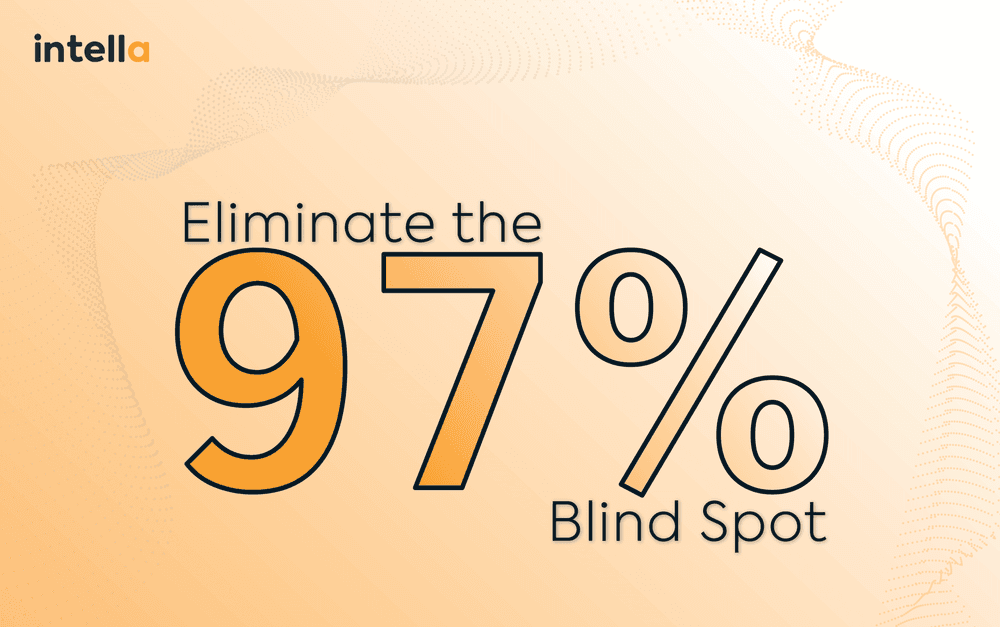
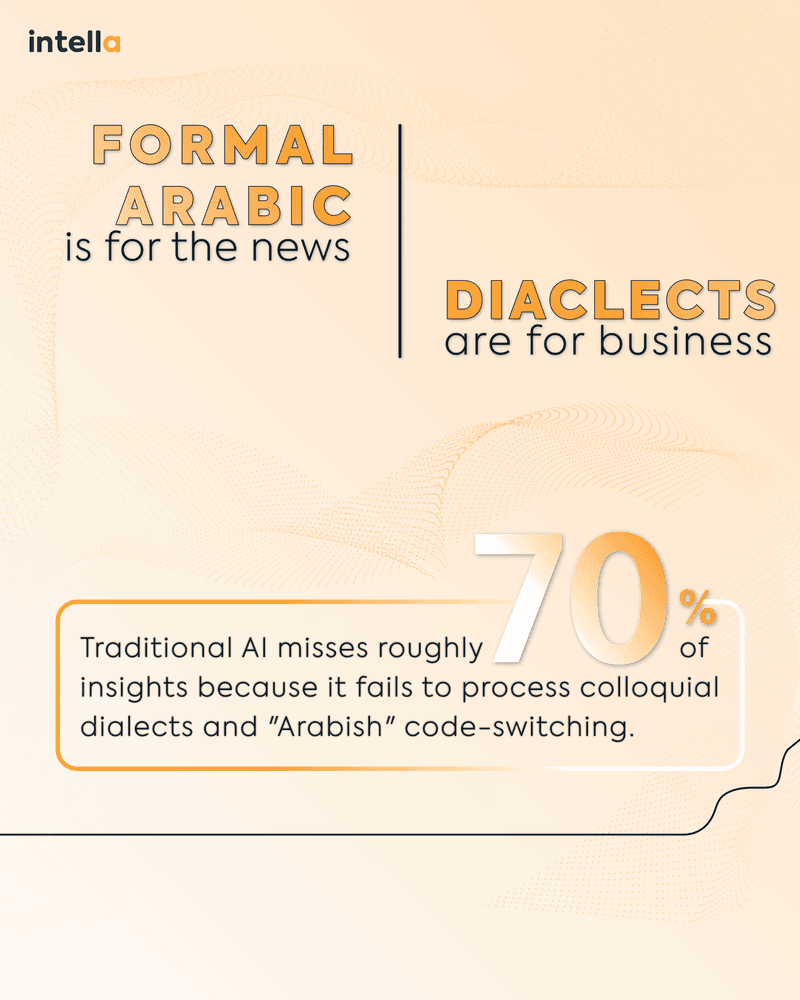
To understand why AI struggles with Arabic e-commerce, you have to understand how Arab consumers actually speak. When an Egyptian shopper searches for a product, they do not use Modern Standard Arabic (MSA), the formal, news-broadcast Arabic that 99% of global LLMs are trained on. Instead, they use a highly complex mix of native dialects, rapidly evolving street slang, and foreign loan words. This linguistic phenomenon is known as Code-Switching. In a single, 5-second voice note, a user might seamlessly blend an English brand name, an Arabic verb, and a hyper-local Egyptian slang term for a clothing item. Example: "عايز كوتشي أبيض مقاس ٤٢" (I want white Nike sneakers, size 42). To a human, this is clear. To a global NLP (Natural Language Processing) model trained in Silicon Valley, it is an incomprehensible string of mismatched data.
Why Standard AI "Drops the Cart"
When e-commerce platforms integrate off-the-shelf voice recognition APIs (such as those provided by Google or Microsoft), the results are consistently poor.
The Translation Bottleneck: Standard models attempt to translate local dialects into MSA or English before processing the intent. This extra translation layer strips away context, leading to wildly inaccurate product results.
Failure on Brand Names: Global AI models struggle to recognize Western brand names when pronounced with an Arabic accent, or Arabic brand names when surrounded by English words.
The "Dead End" UX: When an AI misunderstands a user's voice search, it returns a "No Products Found" page. In e-commerce, a failed search equals an abandoned cart. Frustrated users simply leave the app.
The Shift from "Search" to "Action": Transactional AI
Fixing the transcription error is only half the battle. The true value of AI in e-commerce isn't just understanding what the user said; it is executing the transaction. At Intella, we moved beyond basic voice search to build Transactional AI. Powered by our generative AI agent, Ziila, we enable users to complete a full commerce cycle, from initial discovery to final checkout, entirely through natural conversation. Ziila doesn't just return a list of links; she asks clarifying questions, suggests alternatives if an item is out of stock, and adds items directly to the user's cart.
The Breakthrough: The Jumia Egypt Go-Live
To prove that true conversational commerce is possible in the MENA region, Intella partnered with Jumia, Africa’s largest e-commerce platform. We deployed Ziila into the Jumia ecosystem, creating the region's first end-to-end voice ordering journey in the Egyptian dialect.
How intella’s Architecture Solved the Dialect Barrier:
Native Dialect Training: Instead of relying on MSA, Intella’s core ASR engine (intellaVX) was trained on the "street level" language of the region. It natively understands 25+ Arabic dialects, allowing it to easily process complex Egyptian e-commerce slang.
95.73% Accuracy: By bypassing the translation layer and processing dialects directly, our engine achieves a 95.73% accuracy rate in real-world, high-noise environments.
7x More Accurate Intent: Because Ziila understands the actual intent behind the slang, the search results provided to the user are significantly more accurate than traditional keyword-based typing.
The Future of E-Commerce is Voice
The Jumia go-live is a landmark victory for Sovereign Arabic Intelligence. It proves that when AI is built specifically for our region's dialects and culture, it doesn't just "support" a business, it transforms the revenue model. E-commerce companies that force users to type will soon find themselves losing market share to platforms that simply listen. By integrating dialect-native Transactional AI, brands can collapse the distance between "I want" and "I bought," driving higher conversion rates and unmatched customer loyalty. Stop making your customers scroll. Book a Demo today to see how Ziila can transform your platform's checkout experience.